Advertising print for all Expotrade products
With our products, everything revolves around advertising space, visual perception, design, eye-catching appeal, atmosphere and, last but not least, showcasing your own CI (corporate identity). Our two printing processes make it possible!
Weather-Resistant
waterproof, water-repellent, UV-resistant, tear-resistant despite printing
Scratch-resistant
Special printing techniques prevent the print inks from rubbing off
Full-surface
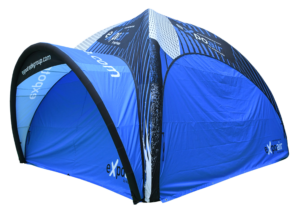
Almost all fabric parts of Expotrade products can be printed.
Crease-resistant
Despite printing, the fabrics remain foldable without damaging the prints
SUBLIMATION PRINTING
full-surface and multi-colour designs
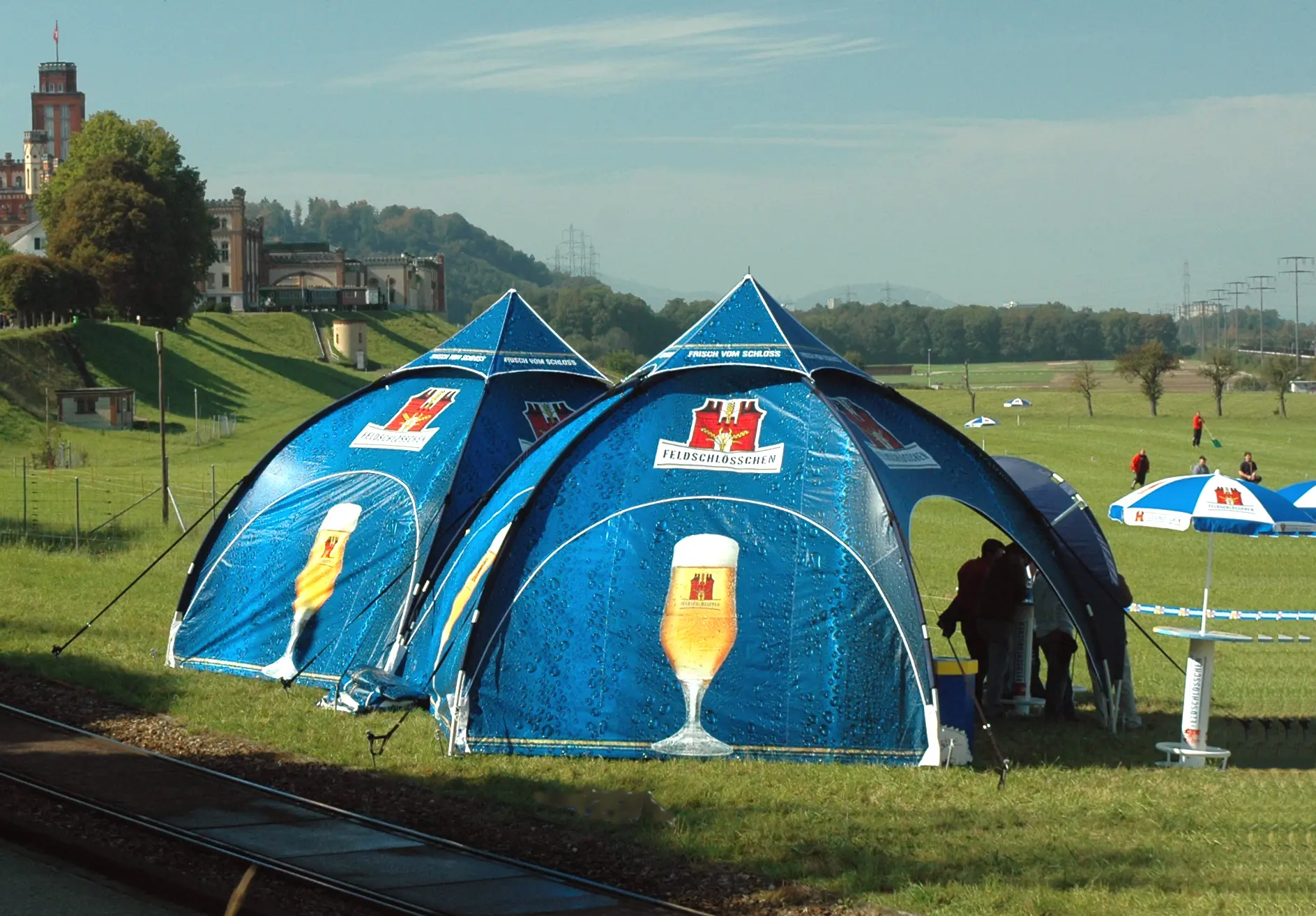
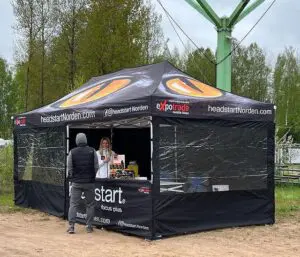
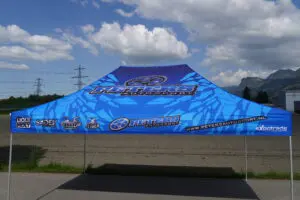
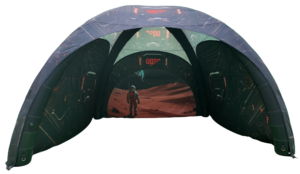
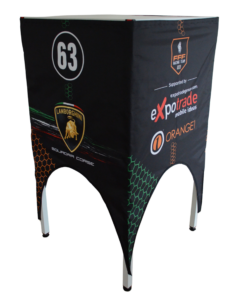
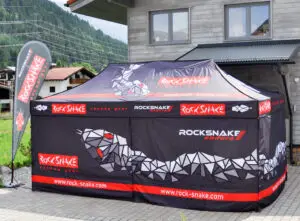
The currently dominant printing process is sublimation printing. In this process, the desired design is first printed in mirror image onto a special carrier paper using an inkjet printer. This is then air-dried and rolled up again. Afterwards, this paper, together with the desired tent fabric (white), is tensioned in the so-called calender. The paper and the tent fabric are then rolled over an oil drum at a temperature of approx. 200°C. The heat then burns the ink from the paper into the fabric and the ink bonds with the fabric fibres. This means that the print is ultimately anchored in the fabric fibres and not just printed on the surface of the fabric. This naturally increases the durability of the prints enormously and at the same time also increases UV protection. This process is particularly suitable for multi-colour logos or designs, or entire images.
More details on sublimation printing
- this print is only possible on a specially treated white fabric
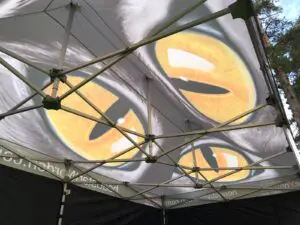
- the reverse side of the print is the mirrored design of the print – i.e. the print image shows through on the reverse side by approx. 90%
- when the tent or dome etc. is illuminated, the print image shines perfectly outwards and therefore also offers an impressive advertising image at night
- By the print image shining through inwards, this print creates additional atmosphere inside the pop-up gazebo or dome.
- Even if the print is kept in dark colours, the tent or dome is brighter inside than, for example, with dyed fabrics.
- Bright and critical colours such as red, orange are softened towards the inside by this printing process, so you do not suffer from a red or orange cast because it is not red inside, only muted.
- This print is carried out by machine, which saves many manual steps that are necessary with other printing processes.
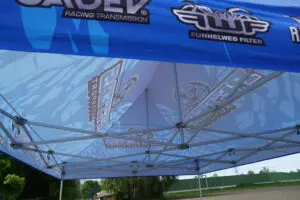
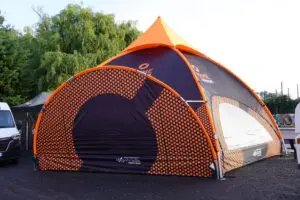
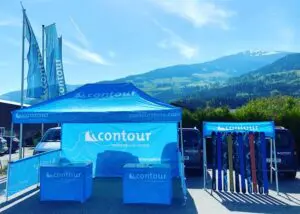
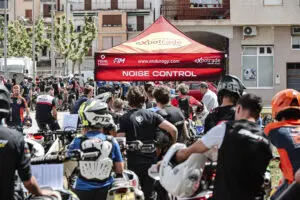
SCREEN PRINTING
larger quantities and smaller logos with fewer colours
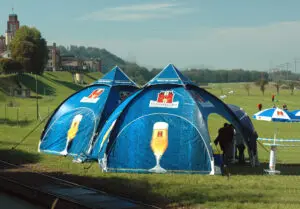
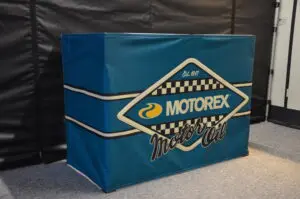
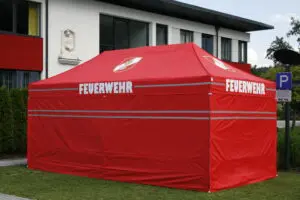
A time-tested printing process is screen printing. Before the advent of sublimation printing, the tents were printed using the screen printing process. Screen printing is a stencil printing process in which ink is pressed through a fine-mesh fabric (screen) onto the tent fabric using a rubber squeegee. The areas that are not to be printed are opaque to the ink. It is ideal for our tent fabric and is characterised by high colour brilliance and durability.
More details on the screen printing process
- a special, elastic printing ink is applied to the surface of the fabric
- ideal for smaller logos with few colours
- can also be used on dyed fabrics in addition to white
- light print inks on dark fabrics are applied multiple times so that the colours are opaque and the fabrics do not show through
- despite the ink layer on the surface, screen printing is scratch-resistant (under normal use)
- very good UV protection through the use of special printing inks
- particularly cost-effective for larger quantities with the same print
- despite the ink on the surface, the fabrics remain foldable without the printing ink flaking off the fabric.
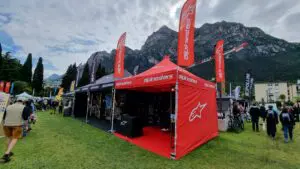
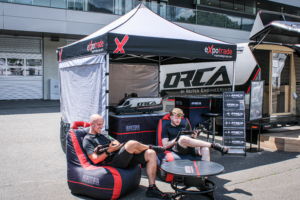
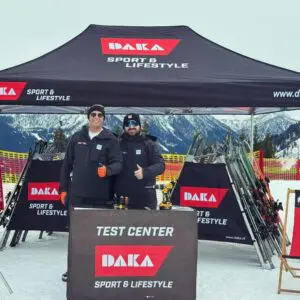

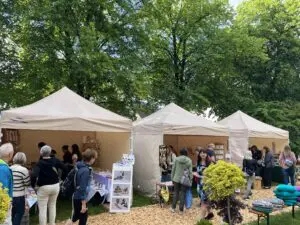
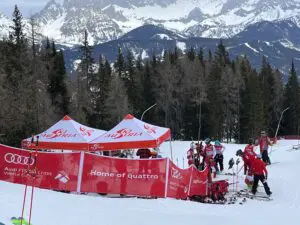
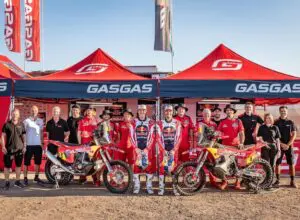
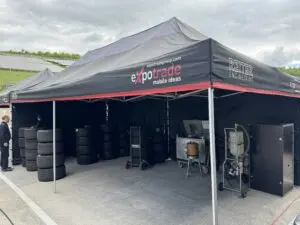
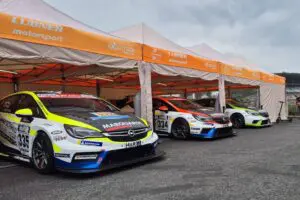
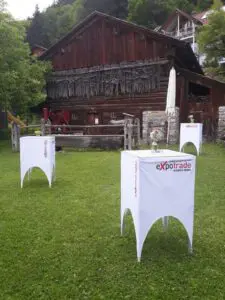
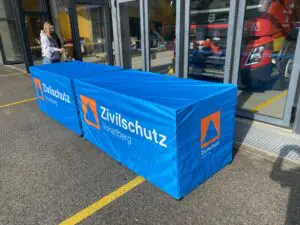
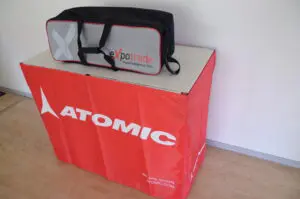
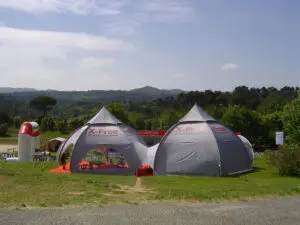
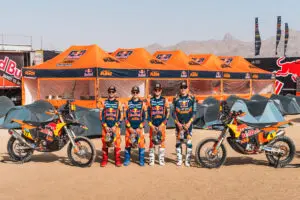
Other printing processes such as thermal film printing, etc.
Thermal film printing on tents etc. does not meet our quality standards and is therefore not offered by us. However, at the express request of the customer, we would be happy to discuss this with you.
Thank you for your understanding
Custom Printing
Your branding, your colors
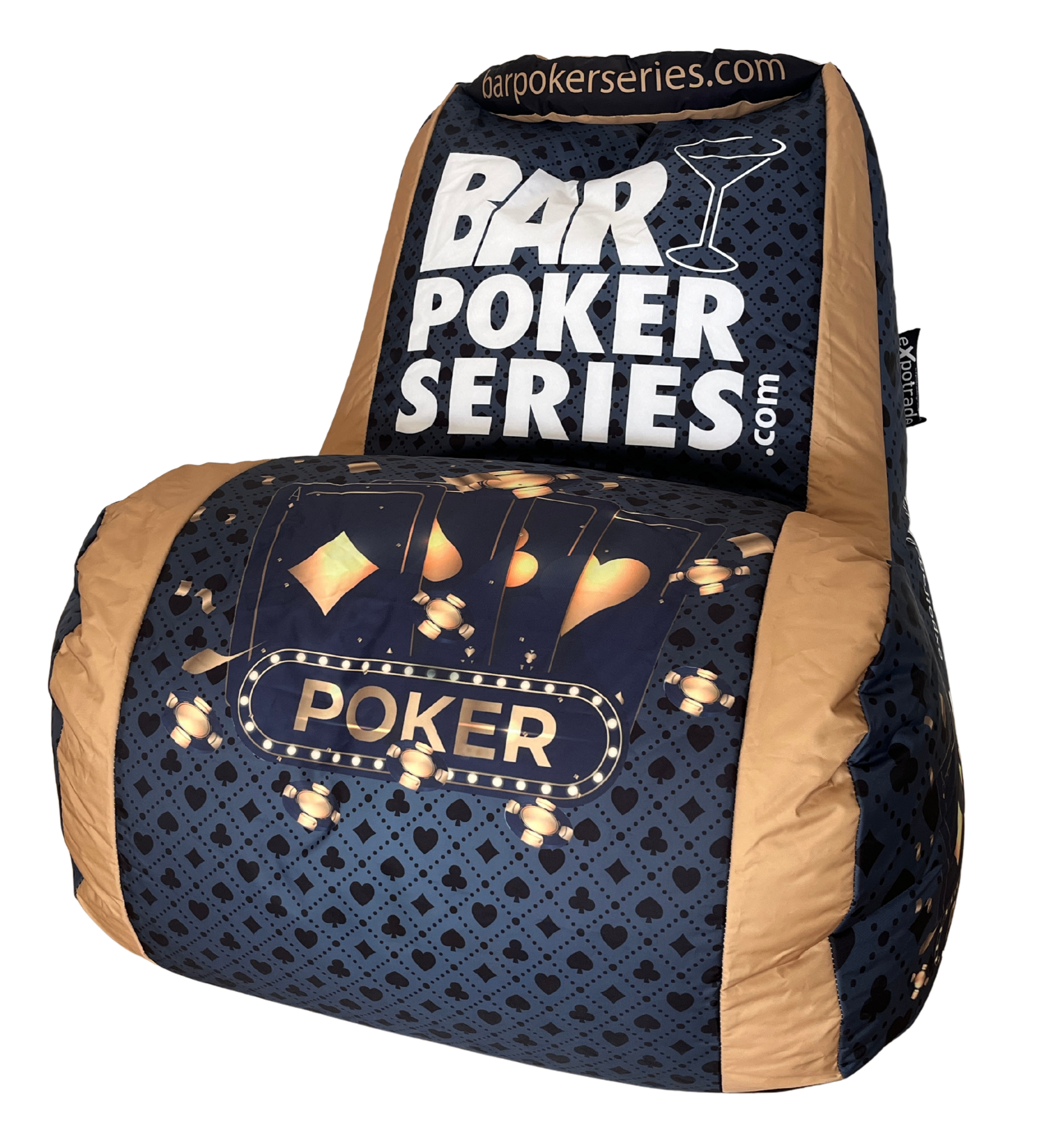
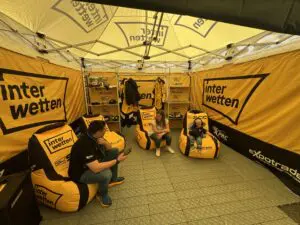
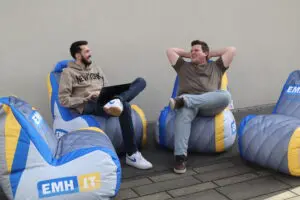
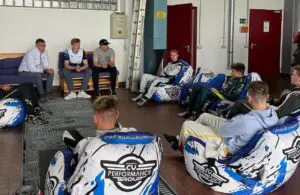
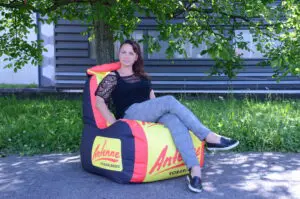
With state-of-the-art printing technology, we transform every Exporelax bean bag into a unique brand presence. Advertising in a different form and a guaranteed eye-catcher!
Free Graphic Proposals
Our designers visualize designs for folding tents in your branding free of charge
UV-Resistant Colors
Photo quality on all surfaces
Full-surface or selectively printed
Ensure a consistent brand presence through designs in your branding
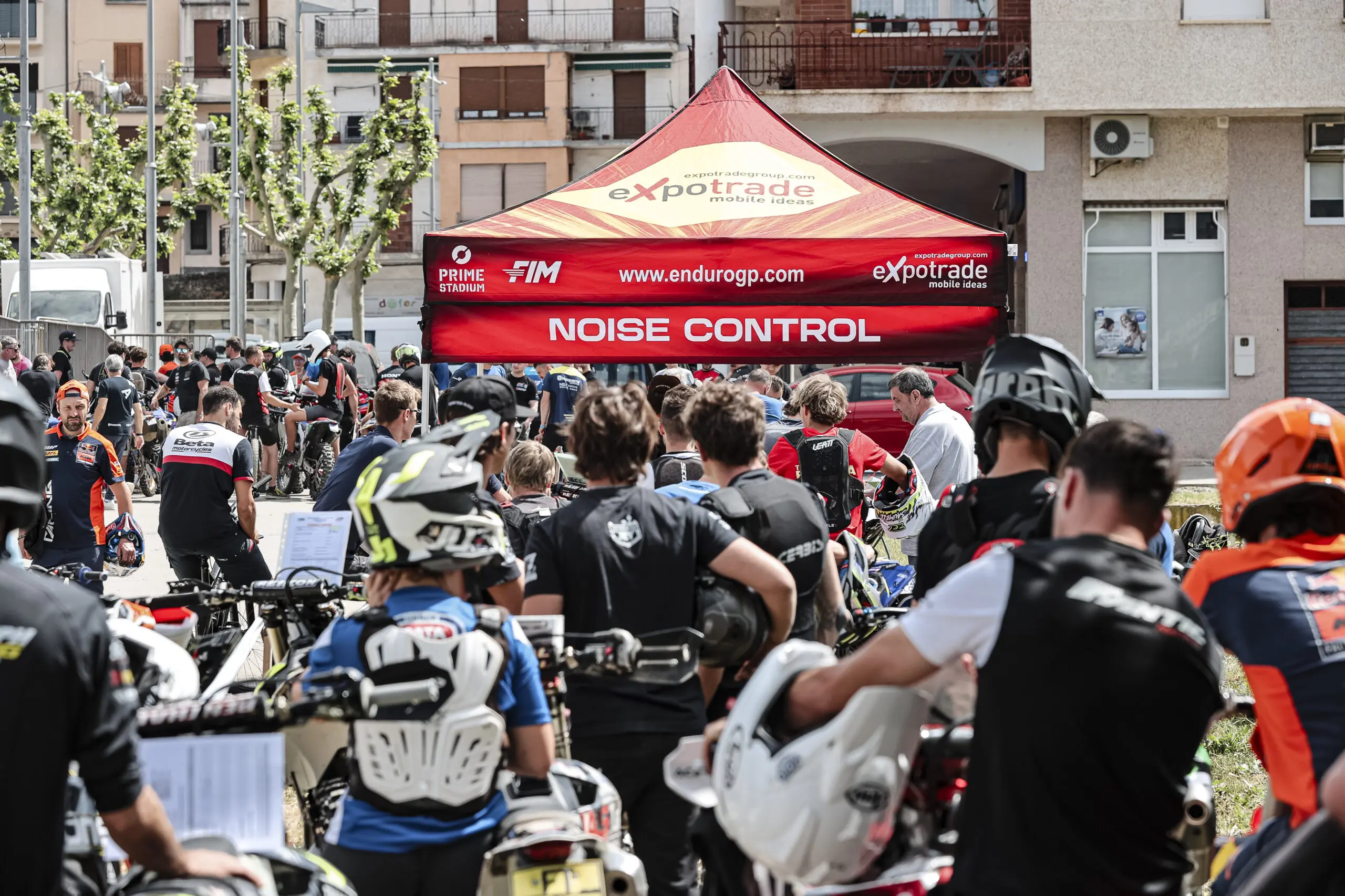
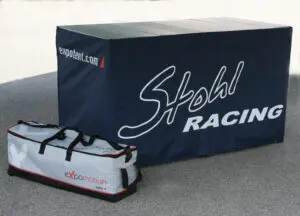
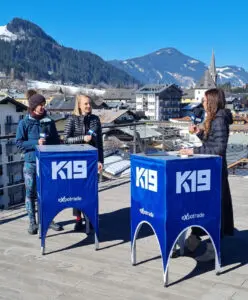
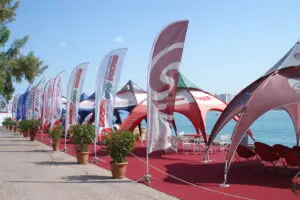
For events, trade fairs, racing and operations
Everything printed in your design
Both our pavilions, folding systems and advertising media as well as the fabric used for them are high-quality and designed for a long service life.
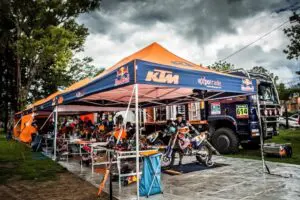
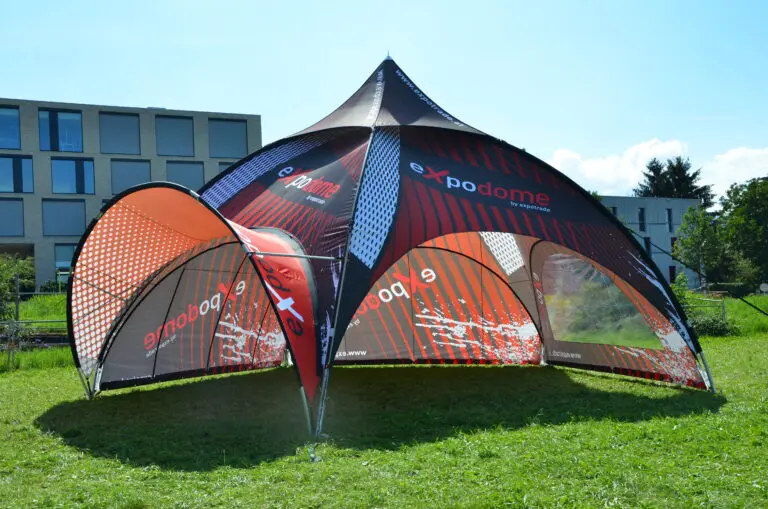
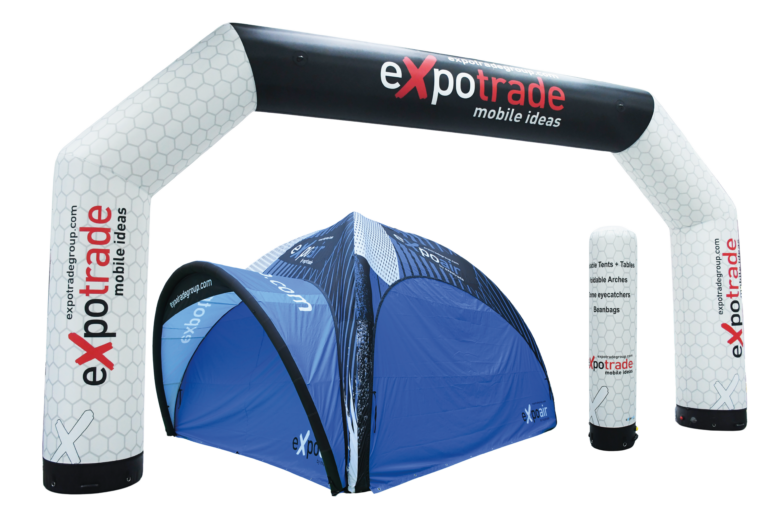

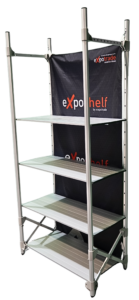
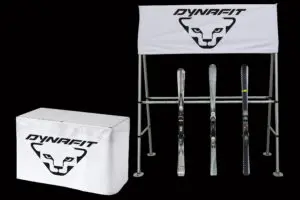
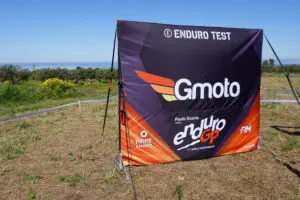
FAQs
Frequently asked questions about advertising print
Can I buy printed Expotrade products online?
Due to the many colour options and printing processes, we do not want to offer this online, but would be happy to advise you on the options in a personal consultation.
Which is better: sublimation or screen printing?
Both are very good printing processes with a high-quality result and print image. It depends on what and how much you want to print.
For larger quantities and dyed fabrics with simple and usually low-colour logos, screen printing is a good option. For example, a single-colour white logo on black fabric, etc.
As soon as the logos are multi-colour and/or you want to print a design background, you usually cannot avoid the sublimation printing process. Here, printing is done by machine, and price-wise it makes no difference how many colours are printed. The area determines the price. Read more details here.
UV protection is a little better with screen printing, whereas with sublimation printing the logos cannot be scratched because the ink is in the fibres of the fabric and not just on the surface as with screen printing.
Which printing process is cheaper?
It always depends on the specific printing request. If there are several tents, for example with a dyed red fabric and a 2-colour logo on it, then screen printing is certainly cheaper than sublimation printing, because with sublimation, in addition to the logo, the red colour also has to be printed full-surface onto the white fabric.
How do I need to supply the print data/logos?
To realise your printing request, we ideally require vectorised data (converted to paths) as .pdf / .ai or .eps files.
If the data is not vectorised, we need high-resolution images in the best quality so that the print image does not become pixelated if possible.
How durable are the prints?
With screen printing, ink is applied to the surface of the tent fabric and remains on the surface. The ink layer varies depending on the print ink and tent fabric colour, but the durability of screen printing is very good and lasts for many years – despite folding the product for packing.
With sublimation printing, the colour is burned into the fibres of the fabric using a 200°C hot oil drum. This means the logo or design is very well protected against abrasion or scratching, and under normal use the colour cannot rub off. This makes sublimation printing very durable over many years.
Can I have my already purchased unprinted tent or dome roof printed later?
No, unfortunately that is not possible!
We first print the tent fabric (with both printing processes) and only after the printed fabrics are finished are they sewn into the desired roof or sidewall, etc.
Printing after sewing is therefore unfortunately no longer possible, as seams, hook-and-loop fasteners, eyelets and the like prevent high-quality printing.
In addition, printing at a later stage would also be significantly more expensive than printing before sewing.
There are manufacturers who also add thermal film printing to existing roofs afterwards – based on our many years of experience, we do not offer thermal film printing for quality reasons. We want to ensure good print quality for years, and with thermal film printing we cannot guarantee that, or it does not meet our quality standards, as the film can detach relatively easily from the tent fabric and can come off by itself during frequent set-up and dismantling of the tents.
Do I have to supply the desired design already finished, or do you do that?
There are both options:
Either you supply us with the finished desired design that you created yourself or had created by an agency – OR
You send us your logo(s) in vectorised form (as paths) as a .pdf / .ai / .eps file and we will be happy to create a non-binding, free graphic proposal for you to view and decide on. Of course, this draft can then be further developed or modified.
However, if the desired design exceeds a certain workload in-house, we would offer you the costs for a design created by us in advance before we implement the design, or you commission another agency to do it.
Contact us
Request a quote
Contact us without obligation. We will be happy to provide a quote and advise you on selecting the right printing process and the various design options.